

National Hotline
+86-0516-87631319
+86-0516-87631319
"Here are 80 million yuan in earnest money upfront—keep the battery cells for us!" Recently, the energy storage industry's production lines are bustling, and deliveries are even busier, with some companies willing to pay hefty deposits just to "secure a single cell." As the smallest energy storage unit in battery systems, the battery cell business continues to thrive. But how long will this boom last—will it be a pulse or a cycle?
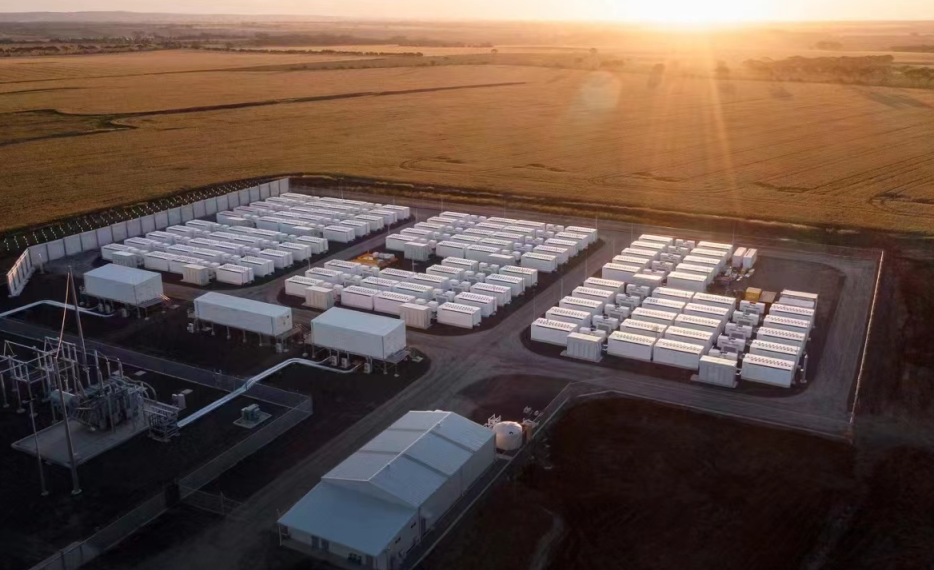
"First, pay you 80 million yuan in earnest money, but keep the battery cells for us!" Recently, production lines in the energy storage industry are busy, and deliveries are even busier. Some companies are willing to pay large deposits just to secure a few cells. With the booming development of the new energy industry, the battery cell business—being the smallest energy storage unit in energy storage battery systems—continues to thrive.
The National Development and Reform Commission and the National Energy Administration recently issued the "14th Five-Year Plan for the Construction of a New Energy System," which stipulates that by 2030, the installed capacity of new energy storage will reach 300 million kilowatts. A recent survey by Shanghai Securities News reporters revealed that in the energy storage industry, multiple downstream companies are proactively increasing prices and paying large deposits in advance to secure production capacity, all to obtain energy storage battery cells. The booming demand for energy storage is driving both volume and price increases across the upstream supply chain, with lithium iron phosphate prices surging recently and high-end production capacity in short supply.
Behind the frequent scenes of "a chip in short supply" lies the profound transformation of energy supply-demand dynamics, corporate profit models, and industry development trajectories driven by emerging trends such as computing-electricity synergy and the marketization of energy storage.
After a rapid surge, will the shortage of supply turn into an oversupply? Industry experts expressed differing views on whether the high demand for energy storage battery cells would become a "flash-in-the-pan" trend.
"Full production" has become the norm
"Currently, the company does not have sufficient production capacity to deliver in the short term, and the responsible person plans to postpone new projects for the near future," said Dai Ying, Senior Vice President of CALB, to reporters.
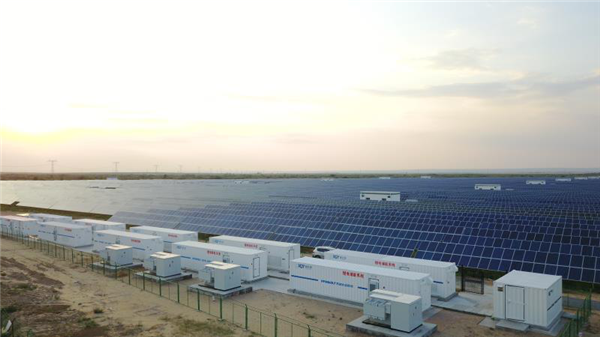
Entering the factories of energy storage enterprises, "full capacity" is the current norm.
"Additional payment is acceptable. Pay you 80 million upfront as a deposit, and leave the goods with us!" This was the original statement heard from a downstream client by a relevant official from RuiJin. "The energy storage production line is currently operating at full capacity, with overtime working to meet overseas order deliveries." He admitted that since the household storage market exploded in 2025, RuiJin's production line capacity and product resources have significantly shifted toward household storage.
Tian Qingjun, Senior Vice President of Envision Group, told reporters that Envision's production schedule remains consistently full, with all bases operating at high capacity and continuously shipping to major markets such as Europe, North America, and Australia.
According to statistics from the China Automotive Power Battery Industry Innovation Alliance, from January to May 2026, the cumulative sales of power and energy storage batteries in China reached 783.4 GWh, marking a year-on-year growth of 48.5%. Notably, the growth rate of energy storage batteries (87.7%) significantly outpaced that of power batteries (34.9%), reflecting the rapid expansion of the energy storage market.
Lithium iron phosphate, a key raw material for energy storage batteries, is currently priced at over 25,000 yuan per standardized package (400 kg/bag), compared to around 10,000 yuan a year ago. Despite the price doubling, demand remains robust.
Mobile phone:+86-0516-87631319
Phone:+86-15651461419
Mailbox:3966142672@qq.com
Address: No. 20 Zhenxing Avenue, Xuzhou Economic and Technological Development Zone, Jiangsu Province